How to Find the Most Profitable Affiliate Programs in Your Niche: A Data-Driven Strategy for Maximum Revenue
Discover how to identify and choose the most profitable affiliate programs in your niche using a proven, data-driven approach. This in-depth guide breaks down exactly how to evaluate commission structures, recurring revenue potential, cookie durations, buyer intent, and program reliability—so you can stop guessing and start earning consistently. Learn how top-performing affiliates uncover high-converting niches, analyze real profitability metrics, and match the right affiliate offers to their audience for long-term, scalable income. Whether you’re just starting out or optimizing an existing site, this strategy-focused guide helps you build sustainable affiliate revenue while delivering real value to your readers.
Osita
1/26/202612 min read

How to Find the Most Profitable Affiliate Programs in Your Niche: A Data-Driven Strategy for Maximum Revenue
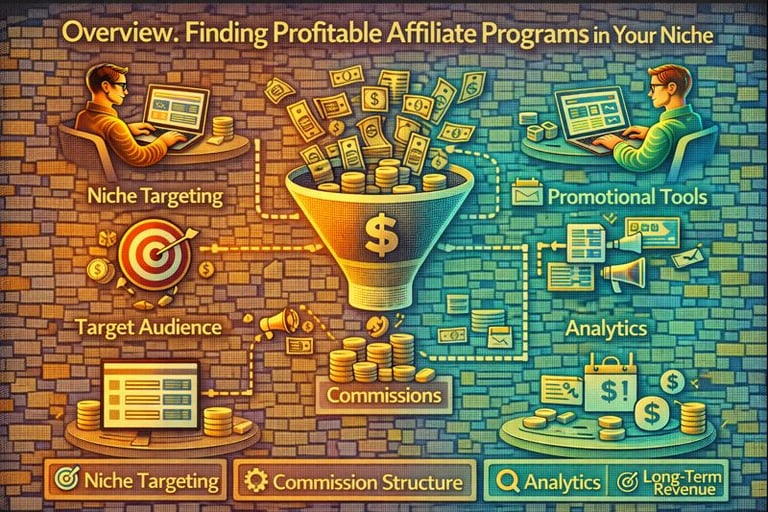
Finding profitable affiliate programs requires more than browsing networks and picking random products to promote. You need a systematic approach that evaluates commission structures, conversion rates, audience alignment, and long-term earning potential within your specific niche.
The most profitable affiliate programs combine high commission rates with products your audience actively wants to buy, creating a sustainable income stream rather than quick, one-time sales. This means looking beyond surface-level metrics like payout amounts and examining factors such as cookie duration, recurring commissions, and program reputation.
Your success in affiliate marketing depends on matching the right programs to your niche and audience needs. By understanding how to identify high-performing programs, evaluate their offerings, and assess their true profitability potential, you can build an affiliate strategy that generates consistent revenue while providing genuine value to your readers.
Understanding Profitable Affiliate Programs
Profitable affiliate programs share specific characteristics that directly impact your earning potential, from commission structures to product demand. Evaluating these factors systematically helps you identify opportunities that align with your audience while maximizing revenue.
What Makes an Affiliate Program Profitable
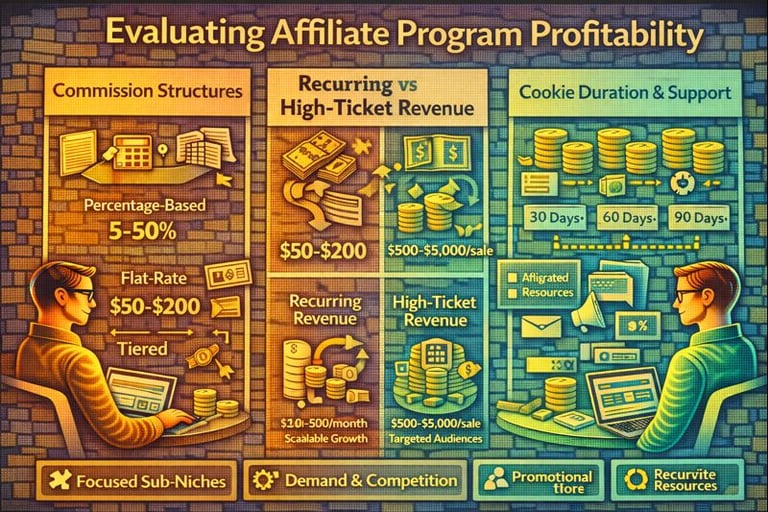
A profitable affiliate program combines strong commission rates with products your audience actually wants to buy. The best programs offer commissions between 20% to 50% for digital products, while physical products typically range from 3% to 10%.
Product quality and brand reputation significantly influence your conversion rate. When you promote trusted brands, your audience is more likely to purchase, which directly increases your affiliate commission earnings.
Market demand plays a crucial role in profitability. Programs in profitable affiliate marketing niches like software, personal finance, and technology consistently generate higher returns because these sectors have active buyers willing to spend money.
Cookie duration affects your earning window. Programs offering 60 to 90-day cookies give you more opportunities to earn commissions from delayed purchases compared to 24-hour cookie windows.
Key Criteria to Evaluate Program Profitability
Commission Structure Analysis
Percentage-based: Calculate potential earnings per sale
Flat-rate: Assess if the fixed amount justifies your promotional effort
Tiered systems: Higher volume can unlock better rates
Your conversion rate matters more than commission rates alone. A program paying 5% that converts at 8% often outperforms one paying 30% with a 0.5% conversion rate.
Payment terms and thresholds impact cash flow. Programs with monthly payouts and low minimums ($50-$100) provide faster access to your passive income compared to quarterly payments with $500 thresholds.
Support resources from affiliate programs help you succeed. Quality programs provide promotional materials, dedicated affiliate managers, and tracking tools that improve your marketing effectiveness.
High-Ticket Versus Recurring Revenue Programs
High-ticket programs offer substantial single payments, typically $500 to $5,000 per sale. These work well when you have a smaller, targeted audience interested in premium solutions like enterprise software or professional services.
Recurring revenue programs generate ongoing affiliate commission from subscription-based products. You earn monthly payments as long as customers maintain their subscriptions, creating true passive income streams.
Comparison of Revenue Models:
Model Type
Typical Earnings
Best For
Effort Required
High-Ticket
$500-$5,000/sale
Targeted audiences
High initial, sporadic
Recurring Revenue
$10-$200/month per customer
Scalable growth
Moderate, consistent
Your niche and audience size determine which model suits you better. Recurring revenue builds predictable monthly income, while high-ticket sales can generate significant earnings from fewer conversions.
Identifying High-Potential Niches
Profitable affiliate marketing starts with selecting the right niche based on audience demand, competition levels, and monetization potential. Understanding how to evaluate sub-niches and buyer intent ensures you target markets where people actively spend money.
How to Spot Lucrative Niche Opportunities
A profitable niche combines strong demand with audiences willing to pay premium prices for solutions. Look for markets where people search for specific product recommendations, like personal finance tools, weight loss programs, or remote work tools.
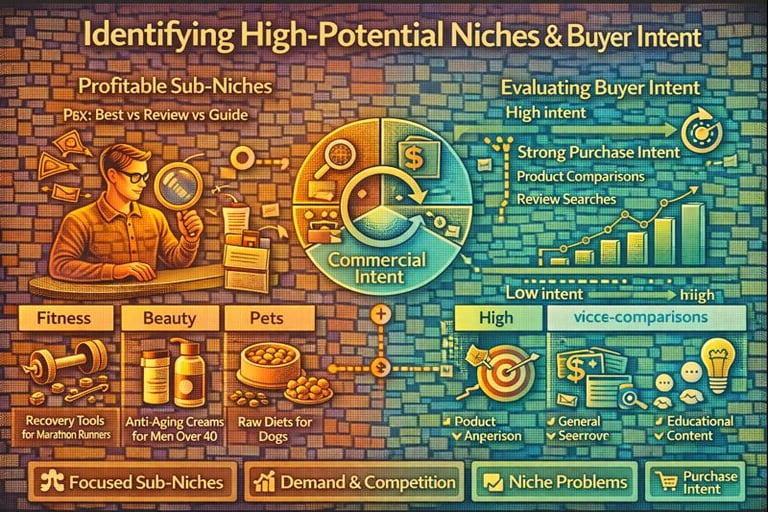
High-potential markets show consistent search volume and commercial intent. You can identify these opportunities by analyzing keyword data for phrases that include "best," "review," or "vs" terms. Markets like nootropics, pet insurance, and travel insurance demonstrate strong buyer intent because searchers already understand they need to make a purchase.
Most profitable niches share common traits:
Recurring problems that require ongoing solutions
Products or services priced above $50
Audiences with disposable income
Multiple product options to promote
The technology and investing sectors consistently generate high commissions because their products carry premium price tags. Meanwhile, the gaming niche and e-sports markets attract engaged audiences who regularly purchase hardware, software, and subscriptions.
The Role of Sub-Niches and Audience Problems
Broad categories like fitness or beauty contain dozens of profitable sub-niches that reduce competition. Instead of targeting the entire fitness niche, focus on specific segments like home workout equipment for busy parents or recovery tools for marathon runners.
Sub-niches let you address precise audience problems. The skincare market becomes more profitable when you narrow it to anti-aging solutions for men over 40 or acne treatments for teenagers. Similarly, pet food splits into raw diets for dogs, grain-free options for cats, or specialty nutrition for exotic pets.
Profitable affiliate marketing niches emerge when you identify what keeps your audience awake at night. The DIY segment succeeds because people need step-by-step solutions for home projects. Meal kits solve the problem of healthy eating without meal planning time.
Map audience pain points to available affiliate programs. If your sub-niche focuses on luxury travel experiences, you need programs offering high-end accommodations and premium travel services, not budget options.
Evaluating Buyer Intent in a Niche
Buyer intent separates browsers from purchasers. You want audiences actively searching for solutions, not just casual information seekers. Keywords indicating comparison shopping or immediate needs signal high buyer intent.
Best niches for affiliate marketing feature audiences in decision-making mode. Someone searching "best standing desk for back pain" shows stronger intent than "what causes back pain." The makeup and recipes niches work differently—makeup shoppers often have specific products in mind, while recipe searchers may only convert through product placement within content.
Analyze search patterns to gauge intent strength:
High Intent
Low Intent
Product comparisons
General information
"How to choose" queries
"What is" questions
Review searches
Educational content
Specific brand names
Broad category terms
The affiliate marketing niche you choose must demonstrate that people actively purchase products online. Markets like software subscriptions, online courses, and physical products ship easily all show strong commercial intent. Test this by checking if major retailers and brands run active affiliate programs in your space.
Researching Affiliate Program Profitability
Understanding which programs deliver real returns requires examining concrete data points like search volume, available networks, and competitive landscapes. These metrics reveal whether your target niche has sufficient buyer intent and sustainable earning potential.
Analyzing Search Volume and Trends
Google Keyword Planner provides baseline data about monthly search volume for product-related terms in your niche. Enter specific product names, categories, or problem-solving queries to identify how many people actively search for solutions you could promote.
SEMrush offers deeper insights into keyword difficulty, cost-per-click values, and seasonal fluctuations. Higher CPC typically indicates commercial intent, meaning searchers are closer to making purchases.
Google Trends shows whether interest in your niche is growing, stable, or declining. Compare multiple related terms over 12-24 months to spot patterns. A niche with consistent or upward trending interest suggests long-term viability, while sharp declines signal potential problems.
Look for search terms with 3,000+ monthly searches and manageable competition. Terms with high volume but low competition often indicate underserved markets where your affiliate content can rank effectively.
Leveraging Affiliate Networks and Aggregators
Major affiliate networks like ShareASale, CJ Affiliate, and Impact aggregate thousands of merchant programs with transparent commission structures. Browse their marketplace sections to compare earnings per click (EPC) and conversion rates across similar products.
Amazon Associates works well for physical products and offers broad inventory, though commission rates typically range from 1-10% depending on category. Compare Amazon's rates against specialized programs in networks that might offer 20-50% commissions for digital products or subscriptions.
Filter network listings by your niche keywords to see available programs. Check minimum payout thresholds, payment schedules, and cookie durations. Programs offering 30-90 day cookies generate more revenue than those with 24-hour windows.
Research platforms like AffSync compile performance data across networks, helping you identify which programs actually convert. Focus on programs with established track records rather than newly launched offers with no proven results.
Assessing Competition and Market Demand
Search your target keywords in incognito mode to see which affiliates currently rank in top positions. Analyze their content quality, site authority, and traffic sources using tools like SEMrush or Ahrefs.
Strong competition from established sites indicates proven demand but requires differentiation. Weak competition with high search volume represents opportunity, though verify that products actually exist to promote through affiliate networks.
Examine traffic sources beyond organic search. Check if competitors use paid ads, social media, email marketing, or YouTube. Multiple traffic channels suggest the niche supports diverse promotional strategies and reduces dependence on search rankings alone.
Review merchant websites directly to assess product quality, pricing, and customer reviews. Products with 4+ star ratings and substantial review counts convert better than unproven offerings. Calculate potential earnings by multiplying estimated monthly traffic by realistic conversion rates (typically 1-5%) and commission amounts.
Evaluating Affiliate Program Offerings
Once you've identified potential programs in your niche, the evaluation phase determines which partnerships will actually generate revenue. The quality of commission structures, program terms, and management support directly impacts your earning potential and long-term success.
Reviewing Commission Structures
Commission rates vary significantly across affiliate programs, ranging from 5% for physical products to 50% or higher for digital services. You need to look beyond the percentage and calculate actual earnings per sale based on product pricing.
Key factors to evaluate:
Commission type: Percentage-based, flat-rate per sale, or recurring monthly payments
Average order value: A 10% commission on a $500 product earns more than 30% on a $50 item
Payment threshold: Minimum earnings required before payout (typically $50-$100)
Tiered structures: Some programs increase your commission rates as your sales volume grows
Recurring commission models often prove most profitable for software and subscription services. These programs pay you each month a customer remains subscribed, creating passive income from a single referral.
Cookie Duration and Program Terms
Cookie duration determines how long your affiliate links remain active after someone clicks them. A 30-day cookie means you earn commission if the visitor purchases within 30 days of clicking your link.
Longer cookie windows increase your conversion opportunities. Some programs offer 60-90 day cookies, while others like Amazon operate on 24-hour windows. Physical products with longer consideration periods benefit from extended tracking.
Program terms also include restrictions on promotional methods. Review whether you can use paid advertising, email marketing, or specific platforms. Some programs prohibit bidding on brand keywords or require disclosure statements.
Trust and Support from Affiliate Managers
Quality affiliate managers provide promotional materials, answer technical questions, and sometimes negotiate higher commission rates for top performers. Programs with dedicated support help you optimize campaigns and resolve tracking issues quickly.
Look for programs offering marketing resources like banner ads, product images, and pre-written content. Access to performance data and conversion metrics lets you refine your promotional strategy.
Check reviews from other affiliates about payment reliability and communication responsiveness. Programs with poor reputations for delayed payments or unresponsive support waste your time and damage your credibility with your audience.
Best Performing Affiliate Marketing Niches
Certain niches consistently generate higher commissions and conversion rates due to strong consumer demand and willingness to pay premium prices. These categories offer established affiliate programs with proven track records and sustainable earning potential.
Technology and Software
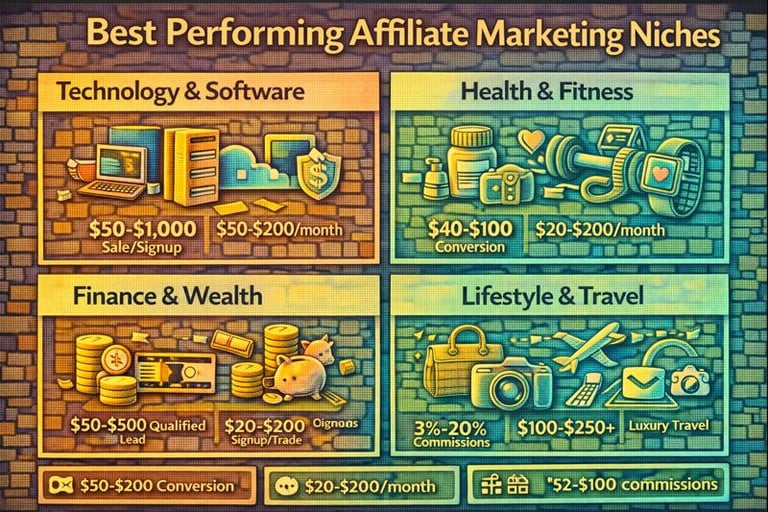
Technology remains one of the highest-paying affiliate categories, with commission rates often ranging from 20% to 50% for software products. AI tools and AI productivity apps have emerged as particularly profitable subcategories, as businesses invest heavily in automation and efficiency solutions.
SEO tools typically offer recurring monthly commissions between $50 and $200 per sale. Companies like SEMrush and Ahrefs provide long-term revenue through subscription-based models. Web hosting services deliver similar recurring income, with popular providers paying $50 to $150 per signup.
E-commerce platforms present substantial opportunities. Shopify's affiliate program pays up to $150 per merchant referral for their basic plan and up to $2,000 for Shopify Plus referrals. These programs benefit from low refund rates and high customer lifetime value.
You can promote cloud storage, project management software, and cybersecurity solutions within this niche. The key advantage is that technology products often require minimal physical demonstration, making them easier to market through content and comparison reviews.
Health, Wellness, and Fitness
The health sector generates consistent affiliate revenue due to recurring purchases and high product prices. Supplements represent a core category, with commissions typically between 20% and 40% per sale. Customers often reorder monthly, creating ongoing passive income.
Weight loss programs command premium commissions, frequently paying $40 to $100 per conversion. These programs combine products with coaching or meal plans, justifying higher price points. Mental health apps and online therapy platforms have grown significantly, with some services offering $50 to $200 per qualified lead.
The fitness niche encompasses multiple revenue streams. You can promote workout programs, nutrition guides, and coaching services. Home fitness equipment delivers higher per-sale commissions, often $100 to $300 for major purchases like treadmills or complete gym systems.
Meditation apps and stress management tools appeal to broad audiences. These subscription services provide recurring commissions as long as referred customers maintain active accounts.
Finance and Wealth Building
Finance programs offer some of the highest commission rates across all affiliate categories. Investment platforms and robo-advisors pay between $50 and $500 per approved account, depending on the initial deposit amount.
Credit cards generate substantial one-time payments, typically $50 to $200 per approved application. Premium cards with annual fees often pay higher commissions. You need to maintain compliance with financial advertising regulations when promoting these products.
Insurance affiliate programs pay well for qualified leads and completed policies. Life insurance, auto insurance, and health insurance products can generate $20 to $150 per sale. Loans and mortgage referrals provide similar commission structures, though approval rates vary by credit requirements.
Cryptocurrency exchanges and trading platforms have added new revenue opportunities. These programs often combine signup bonuses with ongoing commission sharing from customer trading fees.
Lifestyle, Travel, and Luxury
Travel affiliate programs benefit from high transaction values and emotional purchasing decisions. Booking platforms pay 3% to 7% commissions on total reservation costs, which quickly adds up for expensive trips. Luxury travel packages and resort bookings generate particularly high per-sale earnings.
Fashion affiliate programs typically offer 5% to 15% commissions. Designer brands and premium clothing retailers often provide higher rates than fast fashion outlets. You can target specific demographics through style guides and seasonal trend content.
Jewelry affiliate programs command strong commissions due to high product prices. Fine jewelry and engagement rings generate anywhere from 5% to 20% per sale, translating to substantial payments on luxury purchases.
Premium lifestyle products—from high-end watches to designer home goods—appeal to affluent audiences willing to spend more. Fashion affiliate partners benefit from repeat customers who trust your style recommendations and return for multiple purchases throughout the year.
Selecting the Right Program for Your Niche
The right affiliate program aligns with what your audience actually wants while offering fair compensation for your promotional efforts. You need to evaluate how well program offers match your content, assess brand credibility, and determine if potential earnings justify the competitive landscape.
Matching Program Offers with Audience Needs
Your audience's specific interests should drive your program selection. If you run a photography blog, promoting cameras and drones makes sense, while recipe content pairs naturally with baking equipment and kitchen gadgets.
Start by analyzing your existing content performance. Check which topics generate the most engagement and traffic. If your gardening posts about sustainable living practices get twice the views of other content, prioritize programs offering eco-friendly gardening tools and organic seed suppliers.
Consider the buyer intent behind your traffic. Music streaming services work well for entertainment-focused audiences, while gaming affiliate programs fit channels discussing game reviews or streaming gear. Your content marketing strategy should inform these choices, not the other way around.
Test how products fit your content creation workflow. If you create painting tutorials, you can naturally demonstrate specific brushes and canvases. Van life bloggers can showcase computers, cameras, and gadgets they actually use on the road.
Considering Brand Reputation and Product Quality
Partner only with companies whose products you would personally recommend. Your credibility suffers when you promote low-quality drones that malfunction or diets that make unrealistic promises.
Research merchant reliability through affiliate networks and forums. Look for companies with responsive support teams and timely payment histories. A beer subscription service with consistent fulfillment issues will damage your reputation faster than it generates commissions.
Check product reviews across multiple platforms before joining programs. If a streaming gear company has hundreds of complaints about defective equipment, skip their program regardless of commission rates. Your audience trusts your recommendations in areas like books, recipes, or gadgets.
Verify that merchants provide adequate promotional resources. Quality programs offer product images, detailed specifications, and sometimes review samples. This matters especially for technical niches like computers or cameras where your audience expects informed recommendations.
Balancing Competition and Earning Potential
High commission rates mean nothing if the market is oversaturated. Popular niches like blogging and content marketing have intense competition, requiring stronger differentiation strategies.
Calculate realistic earnings based on your traffic volume. A 10% commission on $200 photography equipment purchases generates more per sale than 50% commissions on $10 ebooks. Factor in your conversion rates and average order values.
Evaluate cookie duration against your sales cycle. Gaming products might convert quickly, but sustainable living purchases often require longer consideration periods. Programs offering 90-day cookies accommodate this research phase better than 24-hour windows.
Look for programs with recurring commissions in subscription-based niches. Streaming services, recipe platforms, and software tools can provide ongoing income from single referrals. Balance these against higher one-time payouts from products like cameras or computers based on your content strategy and audience purchasing patterns.