Reader's Choice Awards: Engage Your Audience to Vote for the Best Tools
Reader’s Choice Awards turn your audience into active contributors by inviting them to nominate and vote for the tools they genuinely trust and use. Instead of relying solely on expert opinions or marketing claims, these awards surface real-world preferences directly from your community—creating content that is authentic, data-driven, and highly engaging.
Osita
1/26/20266 min read
Reader's Choice Awards: Engage Your Audience to Vote for the Best Tools
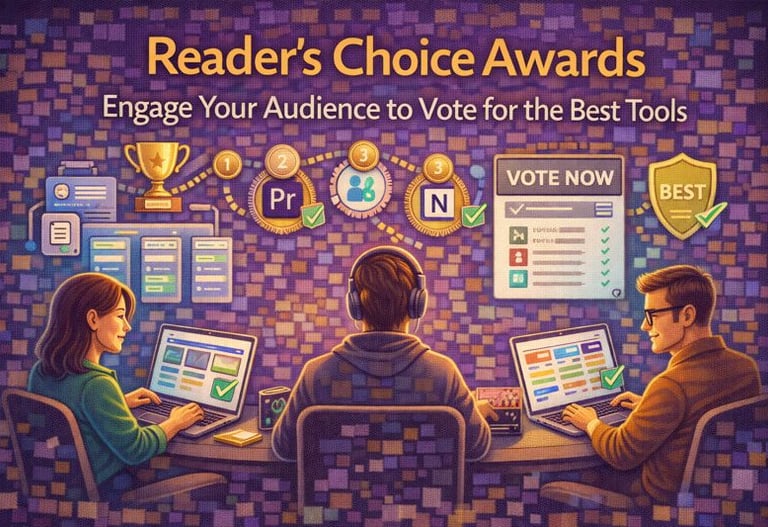
Reader's Choice awards transform your audience from passive consumers into active participants who shape your content's direction. These contests invite your readers to nominate and vote on their favorite tools, resources, or products within your niche. The process builds community engagement while generating valuable insights about what your audience truly values.
Running a Reader's Choice award gives you authentic content, increases audience interaction, and provides social proof for the tools and resources you cover. Your readers become invested in the outcome because they have a direct voice in determining the winners. This participation creates a sense of ownership that strengthens their connection to your brand.
The mechanics are straightforward: you set up nomination and voting phases, promote participation across your channels, and share the results with your community. The real value extends beyond the contest itself, as winners gain credibility through peer validation and your audience discovers tools vetted by people like themselves.
How Reader's Choice Awards Work
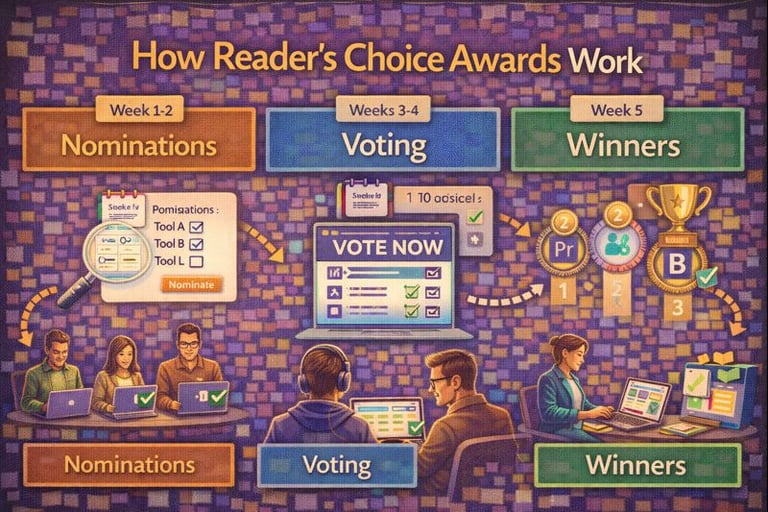
Reader's Choice Awards operate through a structured voting system where your audience nominates and selects their preferred tools within defined categories. The process establishes clear rules for which tools qualify and follows a specific timeline to maintain fairness and transparency.
Voting Process Overview
You'll typically run Reader's Choice Awards in multiple phases to ensure fair results. The first phase involves nominations, where readers submit their favorite tools in each category. You collect these submissions over 1-2 weeks to build a comprehensive list.
After nominations close, you compile the top 5-10 most-nominated tools per category. These finalists move to the voting phase, where your audience selects winners through a poll or ballot system.
You can use online voting platforms like Google Forms, Typeform, or dedicated survey tools to manage the process. Each voter should be limited to one submission per category to prevent ballot stuffing. Some organizers require email verification to ensure vote authenticity.
The voting period usually lasts 2-4 weeks to give readers adequate time to participate. You'll announce winners based on total vote counts or weighted scoring systems.
Eligibility Criteria for Tools
Tools must meet specific requirements to participate in your awards. Most organizers restrict eligibility to products or services that launched or received major updates within the current year.
Common eligibility requirements include:
Active availability during the voting period
Free or paid tools accessible to your audience
No beta-only or invite-only products
Tools must serve the relevant industry or niche
Previous winners may be excluded for 1-2 years
You should clearly state whether you accept submissions from tool creators themselves or limit nominations to actual users. Some awards prohibit vendors from promoting their own products during voting to maintain integrity.
Geographic restrictions may apply if your audience is region-specific. You'll also need to decide whether to allow multiple products from the same company to compete in different categories.
Timeline and Key Dates
A complete Reader's Choice Awards cycle spans 2-3 months from announcement to winner reveal. You should publish your timeline at the start so participants know what to expect.
Standard timeline structure:
Phase
Duration
Activities
Announcement
Week 1
Launch awards, open nominations
Nominations
Weeks 2-3
Collect tool submissions
Finalist Selection
Week 4
Review nominations, create ballot
Voting Period
Weeks 5-8
Active voting on finalists
Results Processing
Week 9
Verify votes, calculate winners
Winner Announcement
Week 10
Publish results, notify winners
You can adjust these timeframes based on your audience size and engagement levels. Smaller communities may need shorter windows, while larger audiences benefit from extended voting periods.
Send reminder emails or posts at key milestones to maintain participation rates. Schedule your awards to avoid major holidays or industry events that might reduce engagement.
Encouraging Audience Participation
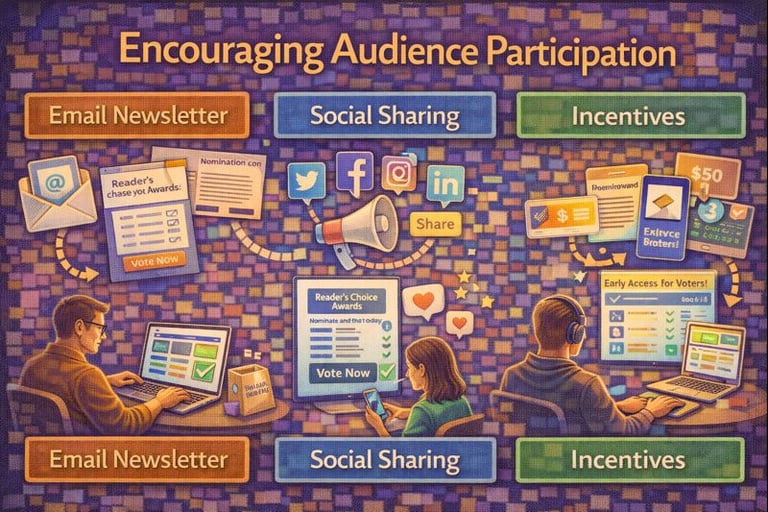
Success in Reader's Choice Awards depends on active voter turnout and sustained interest throughout the nomination and voting periods. The right combination of promotional tactics, voter incentives, and social media engagement transforms a simple poll into a community event.
Promotional Strategies
Start promoting your awards 2-3 weeks before the nomination period opens. Send email announcements to your subscriber list with clear instructions on how to participate and emphasize deadlines for each phase.
Create dedicated landing pages that explain the award categories, voting timeline, and rules. Include visual elements like banners and badges that participants can share on their own websites or social media profiles.
Use multi-channel promotion across your blog, newsletter, podcast, and any other platforms you maintain. Post reminders at strategic intervals: at launch, midway through voting, and 48 hours before closing.
Partner with featured tool companies to cross-promote the awards. Many businesses will share voting links with their own audiences when they're nominated, expanding your reach significantly.
Incentives for Voters
Offer entry into a prize drawing for all participants who complete their ballot. Digital products like exclusive guides, template packs, or extended trial periods work well as incentives.
Provide early access to results for voters before public announcement. This creates a sense of exclusivity and rewards participation with valuable information.
Effective Voter Incentives:
Gift cards ($25-100 value)
Premium content bundles
Free month of paid membership
Exclusive webinar access
Tool discounts from sponsors
Keep incentive requirements simple. Requiring only a completed vote and email address removes barriers to participation while building your contact list.
Maximizing Engagement on Social Media
Post daily updates during the voting period showing participation metrics, trending categories, or close races. Real-time engagement statistics create urgency and encourage fence-sitters to cast their votes.
Create shareable graphics for each category with simple text like "I voted for [Tool Name] in [Category]." Make these available in multiple formats and sizes optimized for different platforms.
Use platform-specific features like Instagram Stories polls, Twitter threads with voting links, and LinkedIn posts targeting professional audiences. Each platform requires tailored content rather than identical cross-posts.
Respond to every comment and mention related to your awards. This visibility keeps the conversation active and shows potential voters that participation matters. Feature voter comments and testimonials in your promotional content to build social proof.
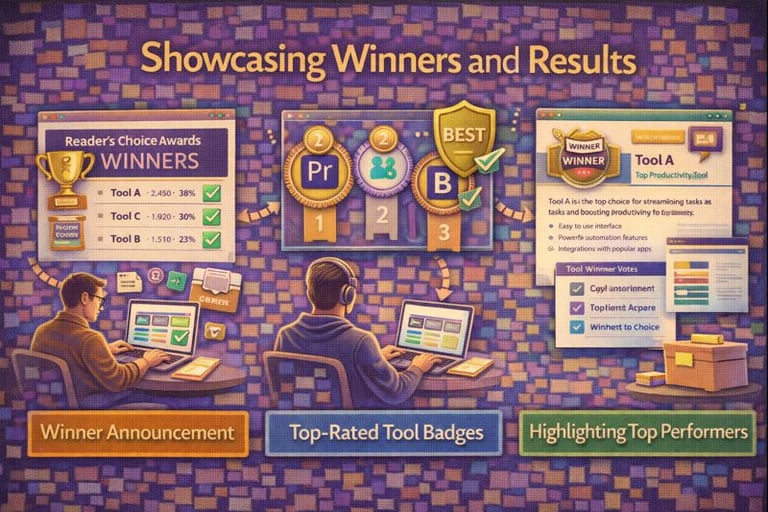
Showcasing Winners and Results
Winners deserve recognition that matches their achievement, and results need presentation formats that engage both participants and broader audiences. The way you announce outcomes, feature top performers, and incorporate community feedback determines whether your awards campaign ends with momentum or fades quietly.
Announcement Formats
You can reveal winners through multiple channels to maximize visibility and engagement. Email announcements work well for notifying participants directly, while social media posts generate public celebration and shareability.
Consider releasing results in phases rather than all at once. A countdown approach builds anticipation, where you announce category winners over several days. Alternatively, host a live reveal event through webinar or social media livestream where you unveil winners in real-time with commentary.
Common announcement formats include:
Dedicated landing page with complete results, vote counts, and winner profiles
Blog post series featuring individual category winners with detailed breakdowns
Email campaign to your subscriber list with visual graphics and winner highlights
Social media graphics designed for each platform's specifications
Press release for significant awards that attract industry attention
Your announcement should include vote tallies or percentages when appropriate, as transparency reinforces credibility. Display runner-up positions to acknowledge strong performers who didn't claim first place.
Highlighting Top-Rated Tools
Winners need more than a simple name mention. You should create winner badges or certificates that tools can display on their websites, providing ongoing value and incentive for participation.
Feature each winning tool with specific details about why users chose it. Include the tool's primary functions, standout features mentioned in votes, and practical use cases. This information helps readers understand what made each winner exceptional beyond popularity alone.
Create comparison tables showing how top tools in each category stacked up:
Tool Name
Votes
Key Strength
Best For
Example entries with actual data from your awards results
Dedicated winner profiles work particularly well for major categories. These can include screenshots, pricing information, and links to the tools themselves.
Sharing Testimonials and Feedback
Voter comments provide authentic perspectives that raw numbers cannot convey. You should collect optional feedback during the voting process asking why participants chose specific tools.
Pull direct quotes from voters and attribute them appropriately (with permission). These testimonials add credibility and help readers understand real-world experiences. Format standout quotes as callouts or highlighted text blocks for visual emphasis.
Share aggregate feedback themes when individual quotes aren't available. If multiple voters praised a tool's customer support or ease of use, mention these patterns as community consensus points.
Consider reaching out to winning tool creators for their reactions to the award. Their responses, whether brief quotes or longer interviews, add another dimension to your results coverage and often provide shareable content they'll promote to their own audiences.